
Yes, active scene patios are absolutely real across North America, and there are hundreds of genuinely thriving outdoor venues operating legally with permits, liquor licenses, live events, and packed weekend crowds. The confusion usually comes from misleading online listings, outdated directory entries, or, in some cases, outright fake venue pages that borrow stock photos and vague addresses to look credible. The good news: it takes about ten minutes of focused checking to tell the difference between a buzzing patio and a ghost listing.
Are Active Scene Patios Real? How to Verify Listings and Spot Fakes

Kira Carver
12 Aug 2026
What an 'active scene' patio actually means
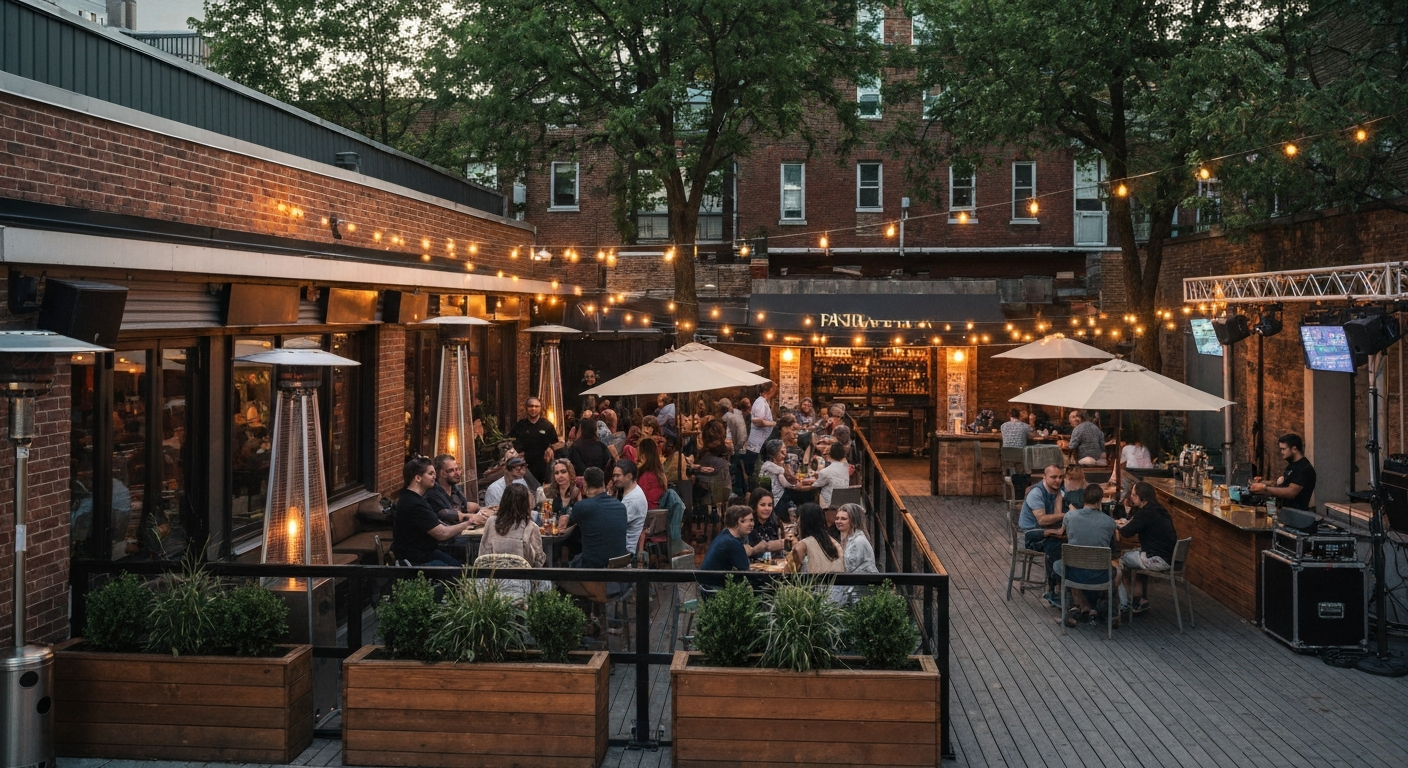
When diners, planners, and patio enthusiasts use the phrase 'active scene,' they're describing something specific: an outdoor patio that is currently operating, drawing regular crowds, hosting events or live entertainment, and maintaining a social energy that makes it a destination rather than just extra seating. It's the difference between a restaurant that dragged some tables onto a sidewalk and a venue with a full outdoor bar, regular DJ nights, string lights, a reservations system, and reviews from last weekend.
From a practical standpoint, active scene patios tend to share a recognizable set of features. Most have a defined outdoor footprint with barriers or planters, dedicated staff serving the patio, an active liquor license that covers outdoor service, and some form of regular programming, whether that's trivia nights, live music, seasonal menus, or ticketed events. If you need to know whether the outdoor area serves drinks, check the listing or venue page for an explicit statement about alcohol service or a posted liquor-license detail, a quick way to answer 'does the patio serve alcohol' before you arrive. Many North American municipalities issue specific patio or sidewalk-cafe permits with explicit conditions around footprint size, seating capacity, hours of operation, and live-entertainment controls, so a legitimately active patio has a paper trail behind it.
- Defined physical footprint with barriers, furniture, and weather features (umbrellas, heaters, pergolas)
- Dedicated outdoor bar or service station with staff assigned to the space
- Current liquor license covering outdoor areas (a separate permit extension in most U.S. states and Canadian provinces)
- Regular programming: live music, DJ sets, themed nights, ticketed events
- Active social media presence showing real crowd photos from recent weeks
- Posted hours specifically for the patio (often seasonal or weather-dependent)
- Reservation or waitlist system for peak patio seating
Why it matters who's asking
For a casual diner, showing up to a patio that's closed, half-built, or nonexistent is just a wasted evening. But the stakes get higher for event planners and patio enthusiasts building entire outings around a specific venue. An event planner booking a private patio buyout needs to know the space is real, properly licensed for alcohol service, and compliant with local code before deposits are exchanged. A group of patio enthusiasts planning a summer crawl through a city's best outdoor bars needs current, verified information, not a listing that hasn't been updated since 2022.
There's also a safety dimension worth flagging. For more on safety considerations at outdoor venues, see the guide 'is the patio theater safe' for a focused checklist on accessibility, fire egress, and structural concerns. A patio that cuts corners on permits may also cut corners on accessibility, fire egress, or structural integrity. Municipalities like Wildwood, NJ and jurisdictions that enforce temporary patio permit rules (as the Town of Ajax does in Ontario) do so partly to protect patrons. If a venue can't demonstrate it's operating within those rules, that's a signal worth heeding before you show up with twenty people on a Saturday night.
Concrete signs a patio listing is genuinely active
Before diving into verification steps, it helps to know what a healthy listing actually looks like. Here are the signals I look for when I'm assessing whether a patio is genuinely operating and worth a visit.
- Recent timestamped reviews (within the last 30 to 60 days) that mention the patio specifically, not just the indoor space
- Owner-posted photos on Google Business Profile or Yelp showing the current patio setup, not renderings or empty daytime shots
- An active events calendar on Eventbrite, Meetup, or the venue's own site with upcoming dates and organizer contact details
- Consistent business hours across Google, the venue's website, and third-party listings, including separate patio hours if seasonal
- A verifiable physical address that maps to a real building in Street View
- A claimed and owner-managed Google Business Profile with recent owner responses to reviews
- Mentions of specific patio features (outdoor bar, heated terrace, rooftop, dog-friendly section) corroborated across multiple platforms
- Liquor license or permit documentation available through a public municipal or state/provincial registry search
Red flags that a patio listing might be fake or misleading
Fake or stale patio listings tend to show a consistent pattern of problems. The most obvious is stock photography: if the patio images look suspiciously polished or feel weirdly generic, run a reverse image search using Google Lens or TinEye. These tools will tell you immediately if the photo lives in a stock library rather than on that actual patio. I've found 'listings' for patio venues where every single photo was a Shutterstock asset with a different venue name dropped into the caption.
- Photos that appear in stock image libraries when reverse-searched (Google Lens, TinEye)
- No verifiable street address, or an address that maps to a parking lot, vacant lot, or unrelated business
- Inconsistent details across listings: different names, phone numbers, or hours on Google vs. Yelp vs. the venue's own site
- Reviews that all arrived within a short window (often signs of review padding) with no recent organic activity
- No owner activity on the Google Business Profile: no responses, no updated photos, no menu uploads
- Social media pages that went dormant months or years ago, with no posts about upcoming events
- A website with no reservation system, no current menu, and no staff or ownership contact information
- Claims of alcohol service with no traceable liquor license or outdoor extension permit in public records
How to verify a patio: start with the official site and reservation pages
Step one is always the venue's own website. A genuinely active patio will have current seasonal hours posted, a patio or outdoor section listed in the menu or amenities, and usually a reservation or waitlist option through OpenTable, Resy, or a proprietary booking tool. If the site hasn't been updated since last year's summer menu, that's a signal. Check whether the copyright year at the bottom of the site is current, and look for any active promotions or events listed with 2026 dates.
If there's a reservation page, try booking a table on the patio specifically. Many booking platforms (OpenTable, Resy) allow you to filter by seating area; if the patio option doesn't appear, it may not currently be available or may be closed for the season. A working reservation system that accepts bookings for the outdoor area is one of the clearest signals that the space is real and currently operating. If the system returns an error or the outdoor section isn't selectable, call ahead before committing to the visit.
How to verify a patio: maps, Street View, and address confirmation
Plug the address into Google Maps and switch to Street View. This gives you a real-world look at the exterior and, in many cases, a visible glimpse of an outdoor patio setup. Google Street View captures dates are shown in the bottom-left corner on desktop, so you can see how recent the imagery is. See the discussion 'Google Maps' Historical Street View Imagery Now Available on iOS (discussion/report)' for reports on iOS access to historical Street View captures. If the imagery is from 2021 and the listing claims a newly expanded rooftop patio, Street View won't confirm that, but it will at minimum confirm the building exists and looks like a functioning hospitality venue rather than a vacant lot.
Google also allows you to scroll through historical Street View captures where multiple dates are available, which can be useful for seeing whether outdoor furniture or a patio structure was added after a renovation. OpenStreetMap is a useful cross-check: it's community-maintained, and you can view the edit history of a map node (the 'view history' feature in OSM) to see when an outdoor seating tag was added or modified. If a patio was tagged in OSM recently by an active local contributor, that's a reasonable independent signal it exists. Beyond maps, confirm the address returns the same business name on Google, Apple Maps, and Yelp. Discrepancies in the name, suite number, or cross-street are a classic sign of a cloned or fraudulent listing.
How to verify a patio: social media and event calendars
A legitimately active scene patio almost always has a social media presence that reflects that activity. Check the venue's Instagram or Facebook page and sort by most recent posts. You want to see actual crowd photos, event announcements, and tagged guest content from the last few weeks, ideally with dated captions or post timestamps. A page that hasn't posted since October 2024 is telling you something. If you spot posts, check the comments: genuine engagement from local followers who reference specific nights or events adds real credibility.
For event-driven patios specifically, check Eventbrite and Meetup. Multiple upcoming events listed on a venue's Eventbrite page with real ticket counts and organizer contact details are among the strongest credibility signals available. That said, platforms like Meetup don't certify the venues themselves, so treat event calendar listings as corroborating evidence rather than standalone proof. Cross-reference any ticketed events with the venue's own website to confirm they're aligned. Local tourism and visitor bureau websites often publish curated event calendars for their cities too, and appearing on those lists is a decent signal a venue is considered legitimate by a third-party local authority.
How to verify a patio: phone confirmation and cross-platform review checks
Nothing replaces a phone call. Call the number listed on the venue's Google Business Profile during posted business hours and ask specifically about patio availability, current hours, whether the outdoor space is open for the season, and whether they're taking reservations for it. A real, staffed venue will answer that question immediately. A disconnected number, a generic voicemail with no venue name, or a call that rings out repeatedly is a concrete red flag.
For reviews, don't just look at the star rating. Go deep into the review dates. On TripAdvisor, Google, and Yelp, sort reviews by most recent and look specifically for mentions of the patio or outdoor space. Check whether reviewer comments describe the same layout, the same staff, or the same menu items across platforms, as consistency across independent reviews is hard to fake. Look for the 'Date of stay' or 'Visit date' fields that platforms like TripAdvisor surface alongside each review. If the most recent patio-specific review is from two summers ago, the space may no longer be operating as described. Email confirmation is another option if the venue lists a contact address: a timely, specific reply is a good sign.
A pre-visit checklist before you commit
Once you've done your verification, run through this quick checklist before booking or showing up. It covers the practical details that separate a smooth patio night from a frustrating one.
| Check | What to Confirm | Where to Look |
|---|---|---|
| Hours | Patio-specific hours (often different from indoor) | Venue website, Google Business Profile |
| Alcohol service | Outdoor liquor license or extension permit confirmed | State/provincial ABC registry, venue staff |
| Dress code | Any posted dress code for the patio or evening events | Venue website, Facebook event pages |
| Accessibility | Step-free access, accessible seating available | Venue site, call ahead, Google reviews |
| Reservations | Whether patio seating requires a booking | OpenTable, Resy, or direct booking link |
| Parking/transit | Nearby parking, public transit options | Google Maps, venue FAQ |
| Safety and permits | Current municipal patio permit and compliance | Municipal permit registry, venue response |
| Events | Any ticketed event that would affect walk-in availability | Eventbrite, venue social media, venue site |
How to use Patio Restaurant Guide to find and report listings
Patio Restaurant Guide exists specifically to solve this verification problem at scale. Listings on the site include location details, current hours, alcohol service status, dress codes, accessibility notes, and seasonal availability, all pulled together so you're not doing eight separate searches before deciding whether to make a reservation. For example, listings can include details like Grand Harbor May Street patio furniture availability to help you confirm outdoor seating. When you find a listing that looks right, the core details are there to cross-reference against what you find on Google and the venue's own site.
If you visit a patio and find it doesn't match its listing, use the site's reporting feature to flag the discrepancy. This is how the guide stays accurate: reader-submitted corrections, updated hours, and reports of closed or fake listings. The guide covers specific patios across North America including well-known local institutions like the Broken City patio in Calgary and the Good Neighbor Bar patio, along with broader venue categories and neighborhood-level roundups. If you're planning an event or a crawl, the guide is a practical starting point, but always layer in the verification steps above before committing time and money to a specific venue. For example, check the Good Neighbor Bar patio listing on Patio Restaurant Guide for a model of a well-documented outdoor venue.
Should you visit, book, or skip it?
Here's the quick decision framework I use. If a patio clears the verification steps above (confirmed address, recent reviews mentioning the outdoor space, active social media, working phone, and consistent hours across platforms), it's worth visiting. If it clears most but has one or two soft gaps (Street View imagery is dated, for example, but everything else checks out), call ahead and confirm specifically before booking a large group or ticketed event. If it fails multiple checks, especially stock photos, no verifiable address, or a dead phone number, skip it and report the listing.
Active scene patios are real, and across North America there are thousands of them operating legally with permits, great atmospheres, and genuinely memorable outdoor experiences. The work of finding a good one has just gotten more complicated by the volume of unverified listings floating around online. Ten minutes of the verification work outlined above will save you a wasted trip and, more importantly, point you toward the real thing.
FAQ
What does “active scene” patio mean?
An “active scene” patio usually refers to an outdoor dining/drinking area that regularly hosts customers, events, or social activity — visible through recent photos, frequent reviews, scheduled events, live music or recurring meetups, and staff/owner engagement on public profiles.
Are “active scene” patios real or are listings often fake?
Many are real, but listings can be misleading or outdated. Genuine active patios typically appear across multiple sources (official site, claimed Google Business Profile, recent reviews/photos, event listings) and comply with local permits. Fake or exaggerated claims often rely on stock photos, missing addresses, inconsistent details, or unclaimed/empty profiles.
What quick checks can I run online to verify a patio before visiting?
Check the venue’s official website and the Google Business Profile for claimed status and recent owner updates; look for recent, timestamped user photos and reviews on Google/Yelp/TripAdvisor; search event platforms (Eventbrite/Meetup) for upcoming listings; view Street View or mapping photos to confirm a physical patio; and use reverse-image search to detect stock photos.
What concrete indicators show a patio is genuinely active?
Indicators include: multiple recent user photos and timestamped reviews; scheduled events on Eventbrite/Meetup or a venue events page; a claimed and regularly updated Google Business Profile with owner responses; a verifiable street address and Street View imagery; and contact details (phone/reservation link) that connect to a working line or booking system.
What are red flags that a patio listing might be fake or misleading?
Red flags include: only one source or a single listing, stock or repeated images found via reverse-image search, no verifiable address or a PO box, inconsistent hours/capacity statements across sites, unclaimed business profiles with no owner activity, and contact numbers that don’t connect or return a generic answering service.
How do local rules and liquor licenses affect whether a patio can serve alcohol or be ‘active’?
Municipal and state/provincial rules commonly require permits or extensions of premises for outdoor alcohol service. Patio size, hours, seating limits, and whether live entertainment is allowed are often defined in local codes. A legitimate patio serving alcohol should be listed on business or liquor-license registries or confirmable with the venue and local licensing body.