
Patio frozen Mexican dinners were a real brand with a long history, and they are almost certainly discontinued from mainstream retail. The short version: Patio Foods was founded in San Antonio in 1946 and pioneered frozen Tex-Mex dinners like tamales and enchiladas. The brand eventually moved through several corporate owners, landing at ConAgra and then J&J Snack Foods after a 2011 acquisition. By around 2020, retailer listings were showing merchant notes explicitly stating the manufacturer had discontinued Patio handheld and burrito products. If you're hunting for them in a supermarket freezer right now, you're likely not going to find them, but the steps below will help you confirm that for yourself and figure out what to do next.
What Happened to Patio Frozen Mexican Dinners: How to Check

Kira Carver
22 Jul 2026
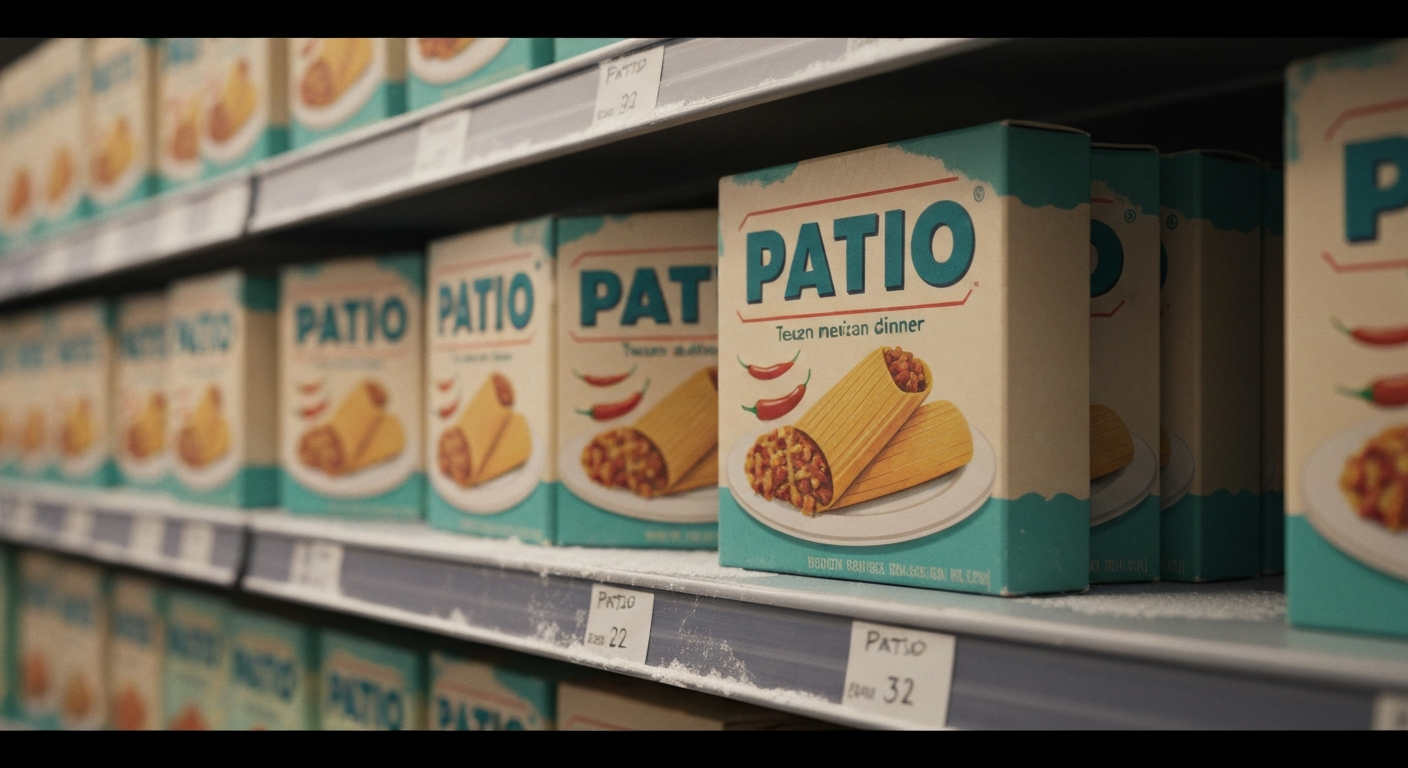
The full story behind Patio frozen Mexican dinners
Patio Foods was born in San Antonio, Texas in 1946, and the founders genuinely deserve credit for putting frozen Mexican food on the American map. They started shipping frozen tamales and chili out of San Antonio in the late 1940s and built Patio into a nationally recognized frozen dinner brand through the mid-20th century, the kind you'd recognize from the TV dinner era. The brand grew big enough to attract corporate interest, and over time ownership transferred through larger food industry portfolios, eventually landing with ConAgra.
In April 2011, J&J Snack Foods closed an acquisition of ConAgra's frozen handheld business, and that deal specifically included Patio among the transferred brands. Under J&J, Patio shifted focus toward dough-enrobed handheld products (think burritos) rather than full frozen dinner trays. J&J's corporate filings and investor materials continued listing PATIO as a handheld brand, but the company's core identity increasingly centered on SuperPretzel, Whole Fruit, and churro products. Company filing/annual report blank" rel="noopener noreferrer">J&J's 2015 Form 10‑K lists PATIO among its handheld brands.. Patio became a smaller, less emphasized part of the lineup. Retailer activity reflects that: by late 2020, Walmart business product pages included merchant notes with timestamps stating that the Patio handheld product was discontinued by the manufacturer. Consumer forum threads and 'forgotten foods' communities on Reddit had already been mourning the brand for years before that, with users noting the burritos disappeared from mainstream freezer aisles sometime in the 1990s-2010s.
Trademark records on file with the USPTO show multiple PATIO trademark registrations over time, with corporate assignees that trace from the original founders through RJR, ConAgra, and J&J references. PATIO, trademark record (Justia Trademarks), registration and class details PATIO — trademark record (Justia Trademarks) — registration and class details. The mark was filed under classes covering prepared and frozen Mexican meals. The trademark history mirrors the ownership chain perfectly, and it's consistent with a brand that was maintained as an asset even as its retail footprint shrank to near-zero.
What most likely happened (the realistic breakdown)
There's no single dramatic reason Patio dinners disappeared from your local freezer. It's more of a slow fade that tracks with patterns common to legacy frozen food brands. Here are the most supported explanations based on the ownership and retail data:
- Corporate consolidation: When ConAgra sold the frozen handheld business to J&J in 2011, Patio went from being one brand in a large frozen meal portfolio to a smaller line inside a company better known for snack foods and pretzels.
- Portfolio prioritization: J&J's investor materials consistently highlighted core lines like SuperPretzel and churros. Patio was listed but not spotlighted, which usually signals a brand being wound down rather than actively marketed.
- Declining shelf placement: Retail buyers control which SKUs stay on shelves. Once a brand loses promotional support from the manufacturer, stores quietly pull it from assortments. The 2020 retailer notes citing manufacturer discontinuation confirm this happened.
- Market competition: The frozen Mexican food space became far more crowded from the 1980s onward, with brands like El Monterey (Ruiz Foods) and others competing aggressively at lower price points.
- Consumer memory gap: Patio's national dinner-tray era was largely the 1950s-1980s. By the time younger shoppers were buying frozen food, the brand had already faded. Low name recognition makes it harder for any owner to justify keeping retail distribution alive.
Step-by-step checklist to confirm the product's status
Before accepting 'discontinued' as final, it's worth running through a quick verification checklist. Sometimes products go regional, move to foodservice-only channels, or get rebranded under a related name. Here's the order I'd work through it:
- Check the current manufacturer (J&J Snack Foods) website and press releases for any mention of PATIO products.
- Search major retailer sites (Walmart, Kroger, Amazon Fresh, Target) for 'Patio burritos' and 'Patio frozen Mexican' to see if any active listings exist.
- Run a UPC or barcode search using the exact product packaging to identify all current variants and their status.
- Search the FDA and USDA FSIS recall databases to rule out a safety-related withdrawal.
- Check social media, Reddit, and niche food forums for recent sightings or confirmed discontinuation reports.
- Call or email J&J Snack Foods customer service directly and ask for the current status of PATIO retail SKUs.
- Contact a grocery store manager or distributor rep and ask whether they can still order the product from their warehouse system.
Check the manufacturer: website, press releases, and customer service
J&J Snack Foods (jjsnack.com) is your first stop. Navigate to their product section and search for 'Patio' or 'handheld.' If nothing comes up in their current product catalog, that's meaningful. Also check their newsroom or press releases section for any announcements about brand changes or discontinuations. Companies don't always make a big announcement when they kill a product, but sometimes a reformulation or brand transfer gets a press note.
If the website is inconclusive, call their consumer affairs line directly. When you call, be ready with the product name (PATIO burritos or PATIO frozen Mexican dinners), the UPC number if you have it, and the approximate size or variety. Ask specifically: 'Is this product still being manufactured?' and 'Is it available through any retail or foodservice channels?' Getting a clear answer from the manufacturer is the most authoritative confirmation you can get.
Check retailers and online inventory: store locators, product pages, and shelf checks
Even if a manufacturer has technically discontinued a product, some retailers hold residual stock for months. Search Walmart.com, Amazon, Instacart, and Kroger's site by product name. Pay attention to whether listings show as 'currently unavailable' vs. 'discontinued' vs. just blank search results. On Walmart Business pages in particular, look at the product description fields and seller notes, because that's exactly where the 2020 merchant-discontinued note showed up for Patio.
Also worth checking: regional grocery chains in Texas and the Southwest, where the brand had the deepest roots. H-E-B, Fiesta Mart, and similar Texas-based chains sometimes carry legacy regional brands that have been dropped by national retailers. If you're near San Antonio, that's especially worth a physical shelf check given the brand's local origins.
Use UPC, barcode and image search to identify the exact product and variants
If you have old packaging or a photo of the product, you have useful tools. The UPC code on the original packaging can be typed into sites like Buycott, Open Food Facts, or the USDA's FoodData Central to pull up product records, including ownership history and whether the item is still in active databases. This is especially helpful because Patio had multiple SKUs over the years (different varieties, sizes, and packaging formats under different owners), and you want to make sure you're tracking the exact variant you remember.
Google Lens or a reverse image search using product packaging photos can also surface archived grocery circulars, food blog posts, and community forum threads that mention the product, giving you a clearer picture of when it was last sold and where. Barcode Lookup (barcodelookup.com) and UPC Item DB are free tools worth running the number through if you have it.
Search official recall databases and safety notices (FDA, USDA FSIS)
It's worth a quick check to rule out a safety-driven removal. The FDA's recall database (fda.gov/safety/recalls-market-withdrawals-safety-alerts) and the USDA Food Safety and Inspection Service recall page (fsis.usda.gov/recalls) both allow you to search by brand name or company. Search for 'Patio,' 'J&J Snack Foods,' and 'ConAgra' with a date range covering the past 15 years. A recall wouldn't explain a full discontinuation by itself, but if the product was pulled for a safety reason it would show up here. Based on current available information, no prominent recall for Patio frozen Mexican dinners is documented as the cause of the brand's disappearance, but it's a 5-minute check that's worth doing before you draw conclusions.
Monitor social media, forums and local groups for reports and sightings
Reddit has been one of the most useful places for tracking discontinued food brands, and Patio burritos have come up in communities like r/nostalgia, r/discontinuedfoods, and r/frozendinners. Search those communities directly for 'Patio burritos' or 'Patio frozen Mexican' and look at comment timestamps to get a timeline of when people last reported finding them. Facebook groups dedicated to vintage and discontinued foods are also active, and Texas-based foodie groups occasionally surface regional availability that national forums miss.
Set up a Google Alert for 'Patio frozen burritos' and 'Patio Mexican dinner' so you'll catch any news, blog posts, or forum activity going forward. If the brand ever gets revived or a regional distributor picks it up, that's how you'll hear about it first.
Contact suppliers, distributors and store managers: who to ask and what information to provide
Store managers have access to their warehouse ordering system, which tells them whether a product is still available from their distributors. Walk into a grocery store, ask for the frozen foods department manager or the grocery manager, and give them the product name and UPC. They can check in real time whether the item is still orderable. This takes about three minutes and gives you ground-level confirmation.
If you want to go deeper, foodservice distributors like Sysco, US Foods, and Performance Food Group carry products that never appear in retail at all. Patio products may have moved to a foodservice-only channel under J&J, meaning they'd show up in restaurant supply catalogs rather than grocery stores. A quick call to a local Sysco or US Foods rep, referencing 'PATIO handheld burritos by J&J Snack Foods,' can tell you whether the product still exists in that channel.
When you contact anyone, have this information ready:
- Brand name: PATIO (all caps is how J&J stylized it)
- Manufacturer: J&J Snack Foods Corp
- Product type: frozen handheld burritos or frozen Mexican dinner trays
- UPC or item number if you have it
- Approximate last purchase date or retail location where you last saw it
How Patio compares to other frozen Mexican brands
If you're trying to fill the gap that Patio left, it helps to know how the brand sat relative to current options. The frozen Mexican category has expanded dramatically since Patio's peak years, and there are legitimate alternatives at similar price points.
| Brand | Owner | Current Retail Status | Notable Products | Tex-Mex / Mexican Style |
|---|---|---|---|---|
| PATIO | J&J Snack Foods | Discontinued from mainstream retail (as of ~2020) | Burritos, tamales, frozen Mexican dinners | Tex-Mex, San Antonio roots |
| El Monterey | Ruiz Foods | Widely available nationally | Burritos, taquitos, chimichangas | Tex-Mex / Cal-Mex |
| Amy's Kitchen | Amy's | Widely available | Bean and cheese burritos, enchilada bowls | California-style Mexican |
| Delimex | Kraft Heinz | Widely available | Taquitos, tamales | Tex-Mex |
| Jose Ole | Ruiz Foods | Widely available | Taquitos, mini tacos | Tex-Mex / Cal-Mex |
| Trader Joe's store brand | Trader Joe's | Available at Trader Joe's locations | Burritos, enchiladas, tamales | California-style Mexican |
Clearing up the name confusion
If you've been searching for 'Patio' and landing on results about restaurants, apps, or bar rescue stories, you're not alone. The word 'patio' is everywhere in the food and dining world. CJ's Patio Grill, for example, is a restaurant with its own Bar Rescue history and has nothing to do with the frozen food brand. Similarly, the Patio app was a consumer app that shut down for entirely unrelated reasons. If you want the background on the consumer app, see why did Patio app shut down for details about its closure. And while Patio burritos are their own discontinued product, the broader story of why Patio frozen Mexican dinners faded is a separate (and older) chapter. If you're curious about any of those threads, they each have their own story worth exploring. For a recent CJ's Patio Grill Bar Rescue update today, see coverage of the restaurant's makeover and follow-ups.
Can't find the frozen dinners? Try the real thing on a patio instead
Here's the upside of Patio frozen dinners disappearing from freezer aisles: Mexican and Tex-Mex cuisine is one of the best categories to track down at an actual outdoor patio restaurant, especially if you're in the Southwest. San Antonio alone, where the original Patio Foods brand was born, has no shortage of patio restaurants serving fresh tamales, enchiladas, and burritos in the style that made the brand famous in the first place. If you're using this site to find outdoor dining, filtering for Mexican and Tex-Mex patio restaurants in your area is an easy way to recapture what you're looking for, with the added bonus of chips, fresh salsa, and a margarita on the side.
Search this guide by cuisine type and outdoor seating to find verified patio restaurants near you that specialize in the same Tex-Mex and Mexican dishes that made Patio frozen dinners a household staple for decades. The food is better fresh anyway.
FAQ
Short answer: what happened to Patio frozen Mexican dinners?
Patio (sometimes styled PATIO) was a historic frozen Tex‑Mex/frozen‑dinner brand that changed corporate owners over decades. Records and reporting show Patio’s product lines moved through Conagra and were later part of a J&J Snack Foods acquisition of frozen handheld brands. Over time Patio handheld/frozen burrito SKUs were removed from many retailer assortments and at least some SKUs were discontinued by the manufacturer or quietly phased out. Public retailer listings and community reports from the 2010s–2020s indicate Patio frozen Mexican items became scarce or discontinued in mainstream supermarket freezers.
What authoritative evidence supports that history?
Historical press and local reporting credit Patio Foods (founded in San Antonio, 1946) with early frozen Tex‑Mex products. Conagra’s historical materials list Patio among legacy frozen brands, and trade press reported Conagra sold its frozen handheld business (including Patio) to J&J Snack Foods in 2011. More recent SEC/company filings show PATIO listed historically among handheld brands while retailer pages and buyer notes from the late 2010s/2020s indicate SKUs were removed or discontinued.
How can I verify whether a specific Patio product (burrito/tamale/TV-dinner) is discontinued, recalled, or temporarily out of stock?
Step-by-step verification you can do: 1) Check the manufacturer: search J&J Snack Foods’ product pages and investor materials for 'PATIO' or contact their consumer/customer service. 2) Look up the product UPC/brand on major retailer sites (Walmart, Kroger, Target) and wholesaler/business pages for discontinuation notes. 3) Use UPC/GTIN lookup sites (e.g., GS1/UPC databases or retailer pages) to confirm active SKUs. 4) Search official recall databases: FDA, USDA (if applicable), and Recalls.gov for product-specific recalls. 5) Check trademark and corporate filings for current owners (USPTO/Justia trademark records). 6) Search community and archival threads (old product listings, forgotten‑foods forums) for historical availability context. 7) Call or email local stores/warehouse managers to ask about delisting or stocking plans.
Where to look for manufacturer information and consumer contacts?
Primary places to check: the current corporate owner’s website (J&J Snack Foods), the investor relations or product sections of company filings (SEC 10‑K/10‑Q), and any consumer/customer support contacts listed on the company site. If you find a different listed owner in trademark/filing records, follow that company’s site and contact details.
Which official recall and safety resources should I check?
Search: 1) FDA Recalls & Withdrawals (for most packaged food), 2) USDA Food Safety and Inspection Service (if the product contains certain meat products under USDA jurisdiction), 3) Recalls.gov (aggregated U.S. recalls), and 4) your country’s equivalent agencies if outside the U.S. Use the product name, UPC, and manufacturer name when searching.
What are the most likely reasons Patio frozen Mexican dinners disappeared from store freezers?
Common, evidence‑supported reasons: 1) Corporate ownership changes and portfolio rationalization after acquisitions (brands get deprioritized or consolidated). 2) Poor retail sales or declining demand causing manufacturers or retailers to discontinue SKUs. 3) Product rebranding or reformulation—items may be sold under a different brand name after transfer. 4) Supply‑chain or manufacturing shifts (plant closures, ingredient sourcing). 5) Temporary retailer delisting/out‑of‑stock during seasonal changes. 6) Product recalls are possible but less commonly the long‑term cause; always check recall databases for confirmation.