
Most restaurant patios in North America follow a pretty consistent set of rules: no outside food or drinks, designated (or zero) smoking areas, pets only in specific zones, and a dress code that ranges from 'shoes required' to full smart-casual depending on the venue. Age restrictions, reservation policies, and alcohol last-call times vary a lot more, and that's where people get caught off guard. The fastest way to avoid surprises is to spend two minutes checking the venue's website or calling ahead before you show up, especially on a summer weekend when patio demand is at its peak. If you're trying to figure out is Patio Nightclub 18, use the venue’s policy page or call ahead so you know the exact age requirement before you go patio spot.
Restaurant Patio Rules: A Practical Guide for Diners

Kira Carver
1 Jul 2026
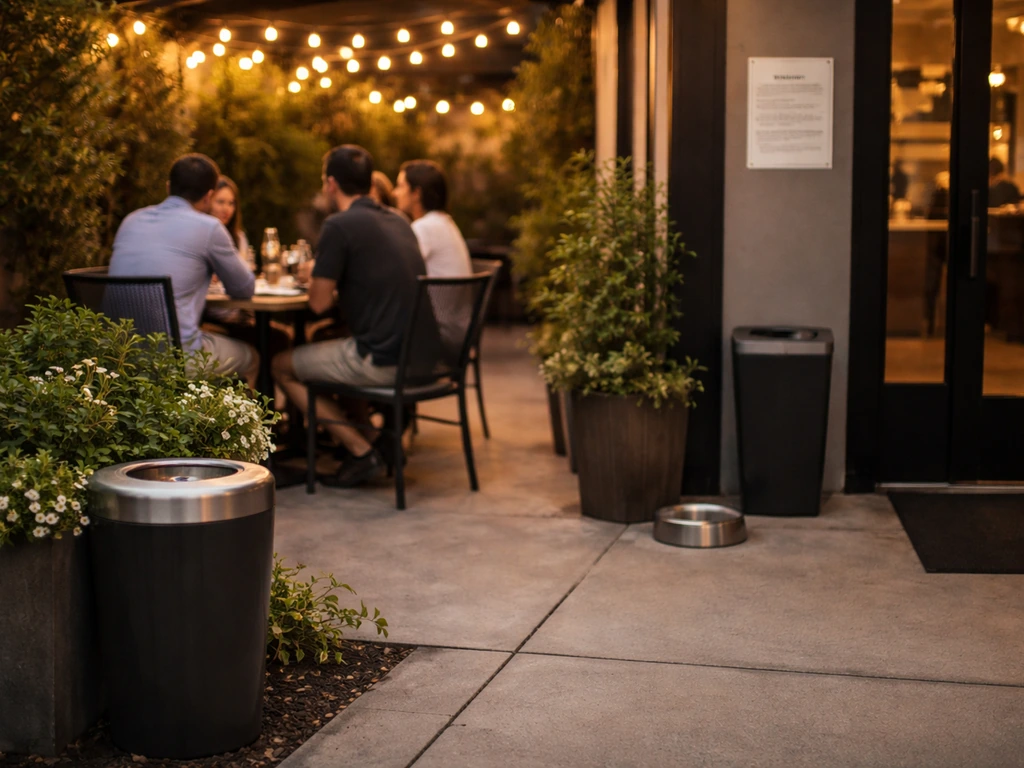
What patio rules usually include: the quick checklist
Before diving deep, here's what most restaurant patios regulate in some form. Not every venue enforces all of these, but you can expect to encounter most of them at a mid-range or upscale patio spot.
- Seating policy: walk-in, reservation-only, or hybrid waitlist
- Smoking and vaping: usually prohibited entirely or restricted to a specific corner or dedicated smoking section
- Outside food and beverages: almost universally not allowed
- Dress code: ranges from 'no swimwear' to smart-casual or cocktail attire at higher-end spots
- Age/ID requirements: some patios are 19+ or 21+ after a certain hour, especially if they operate as a bar/lounge after dark
- Pet policy: many patios allow leashed dogs in a designated zone; others prohibit all pets except service animals
- Service animals: always permitted under ADA rules, no exceptions
- Accessible seating: required by law, should be on an accessible route
- Alcohol service cutoff: tied to state/provincial liquor law and venue-specific last-call times
- Group size limits: large parties (usually 6+) may need advance reservations or a minimum spend
- Noise and behavior expectations: most patios prohibit amplified personal audio, excessive noise, or disruptive behavior
- Open flame and generator use: almost always a venue-only responsibility; guests can't bring their own heating or lighting
- Holiday and event-specific rules: prix-fixe menus, ticketed entry, or modified hours on major holidays
Think of this list as your pre-visit scan. If any of these categories are a concern for your group (you're bringing a dog, someone uses a wheelchair, you've got a party of 10), those are the ones to confirm directly with the venue.
Seating, reservations, and how patios handle waitlists
Patio seating is almost always first-come, first-served unless a venue explicitly offers reservations for outdoor tables. A lot of popular spots only reserve indoor tables and treat the patio as walk-in only, which means on a busy Friday night in July you could be waiting 45 to 90 minutes even with an indoor reservation. Always ask specifically: 'Can I reserve a patio table, or is it walk-in only?'
Venues that do take patio reservations often hold the table for only 10 to 15 minutes past your booking time, the same way indoor reservations work. If your group is running late, call ahead. Some spots, especially rooftop bars and high-demand summer patios, require a credit card to hold patio reservations and charge a no-show fee, typically $10 to $25 per person.
For walk-in waitlists, most places now use text-based systems like Yelp Waitlist, OpenTable, or their own SMS queue. You can usually add yourself remotely before you arrive, which is worth doing if the patio fills up fast. A common rule: waitlist spots are held for about five minutes once your table is ready, then you're bumped. Don't wander too far.
Groups of six or more almost always need to call ahead regardless of the seating policy. Large-party patio seating often requires pushing tables together, which affects neighboring guests, so venues manage it more carefully. Some patios cap party size at eight or ten unless you're booking a private section, which typically comes with a food and drink minimum.
Behavior rules: noise, smoking/vaping, and cleanliness
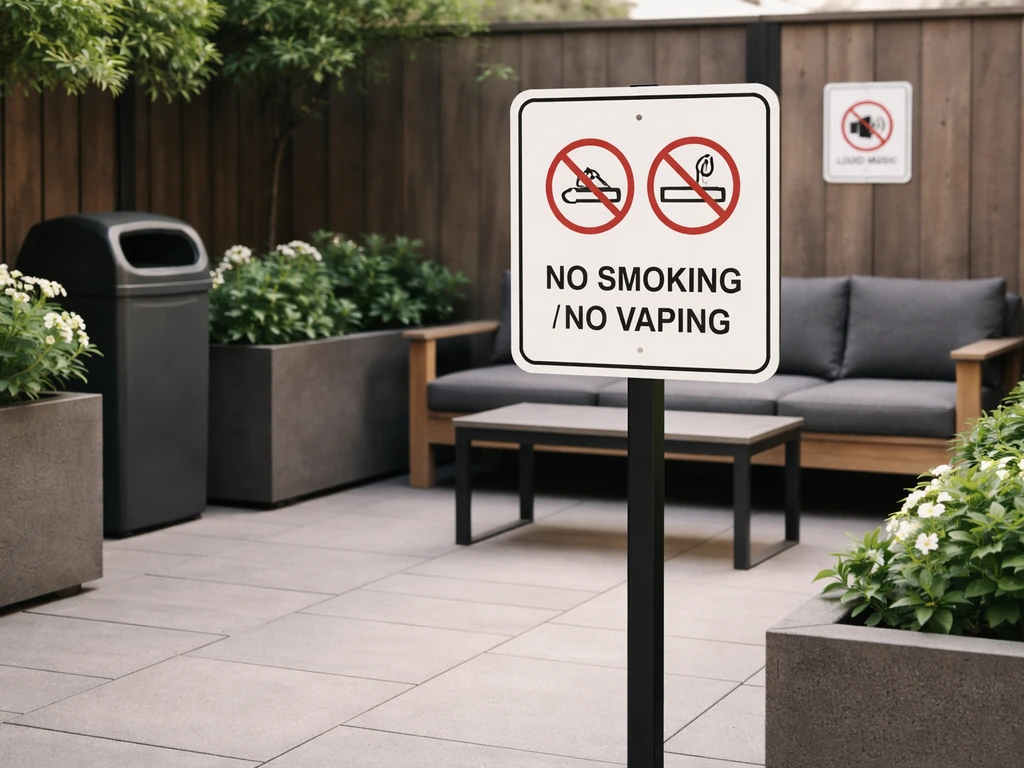
Patios operate in public-facing spaces, so noise expectations are usually enforced more actively than inside. Playing music from a personal Bluetooth speaker is one of the most commonly cited violations that gets guests asked to leave or turn it down. The venue controls the soundtrack. Personal audio is almost always a no.
Smoking and vaping rules have tightened significantly across North America over the past few years. In most urban areas and in all Canadian provinces, smoking and vaping within a set distance (usually 9 meters or about 30 feet) of a restaurant entrance, patio, or window is prohibited by local bylaw, not just venue policy. That means even if a patio looks 'open air,' lighting up at the table is likely illegal, not just frowned upon. If you need to smoke, ask staff where the designated spot is before you assume one exists.
Cleanliness is mostly common sense but worth mentioning for groups: don't rearrange patio furniture beyond what staff direct, don't let kids run between tables, and if you're at a self-bussing counter-service spot, clear your table when you leave. Full-service patios handle bussing for you, but flagging your server when your table is getting cluttered keeps things moving, especially when the patio is packed.
Food and drink policies: outside items, alcohol service, and last call
Bringing outside food or drinks onto a restaurant patio is almost universally prohibited. This isn't arbitrary: it's tied to liquor licensing, health codes, and liability. If you bring your own wine to a licensed patio and a staff member doesn't catch it, the venue can still be held responsible. A handful of venues in specific states or provinces allow BYOW (bring your own wine) with a corkage fee, but this has to be explicitly offered by the restaurant. Assume it's not allowed unless you've confirmed otherwise.
Alcohol service on patios is governed by the venue's liquor license, which may or may not cover outdoor space separately from the indoor area. Some patios are licensed differently from the interior, meaning your drink order at the patio bar isn't automatically transferable inside, and vice versa. This is one reason Bar 54 patio vs lounge matters when you want a specific drink setup or service style outdoors. This is especially relevant at rooftop or courtyard venues where 'outside' is technically a separate licensed zone.
Last call times on patios are often earlier than indoors, because outdoor service tends to wind down before full close. A bar might serve indoors until 2 a.m. but stop outdoor alcohol service at midnight or 1 a.m. Seasonally, patios may also have weather-based cutoffs where service stops if the temperature drops below a threshold or if rain moves in. Don't count on a late evening outdoor experience without confirming the patio's own last-call time.
On major holidays (July 4th, Labor Day, Canada Day, etc.), many patios run ticketed events, special prix-fixe menus, or mandatory bottle-service packages. Walk-in patio dining on those dates is often not available at popular spots. If you're planning a holiday outing, check the venue's event calendar and book early.
Dress code, age/ID, and group-specific policies
Dress codes on patios span a wide range. For example, the El Patio Wynwood dress code can shift depending on the time of night and the venue's bar and lounge vibe dress codes. Casual daytime patio restaurants might just ask for shoes and a shirt. Evening patios at upscale or nightlife-adjacent venues often enforce smart-casual or cocktail attire, and some rooftop spots in cities like Miami, New York, or Toronto enforce dress codes as strictly as any nightclub. When in doubt, dress one step up from what you'd wear to the beach.
Age restrictions are especially relevant at patios that transition into bar/lounge environments after a certain hour. A restaurant patio that's family-friendly at 6 p.m. might go 19+ or 21+ at 9 or 10 p.m. This is common in nightlife-heavy areas like Wynwood in Miami, where venues like El Patio operate as both a dining and entertainment space, and the age and dress rules shift depending on the time of night. Always check if the venue has a dual identity as a bar or nightclub.
Group-specific policies often include minimum spending requirements for large parties, mandatory gratuity (usually 18 to 20 percent auto-added for groups of six or more), and sometimes a fee for splitting the bill more than two ways. Some patios restrict access to reserved or private sections on busy nights, meaning a walk-in group of eight might not be seated even if tables are technically available.
Pets, service animals, and accessible seating
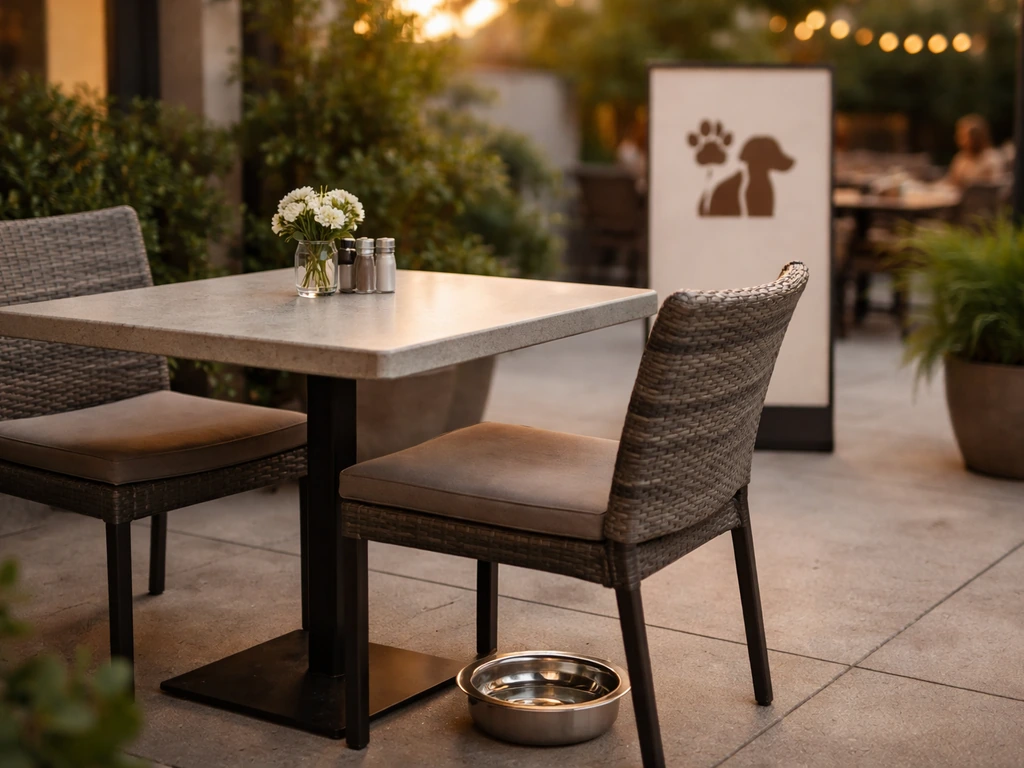
Pet policies vary more than almost any other patio rule. Some patios are explicitly dog-friendly and even offer water bowls and pet menus. Others prohibit all animals. The safest assumption: don't bring your pet unless the venue's website or a confirmed phone call says it's allowed. 'Dog-friendly patio' should be written somewhere, not implied.
Service animals are a completely different category. Under the ADA, restaurants are required to allow service animals into all areas open to the public, including patios, regardless of a no-pets policy or local health codes that might otherwise restrict animals near food.
The key distinction: a service animal must be a dog (or in some cases a miniature horse) that is trained to perform specific tasks for a person with a disability. Emotional support animals, therapy animals, and comfort animals do not qualify under the ADA and can legally be refused.
If the service animal's function isn't obvious, staff can only ask two specific questions: is this a service animal required because of a disability, and what work or task has the dog been trained to perform? [They cannot ask for documentation, certification, or a demonstration.
](https://disabilitylawco. org/sites/default/files/uploads/Service%20and%20Assistance%20Animals%20in%20Food%20Establishments%20Letter%20and%20fact%20sheet_1. pdf)
Accessible seating on patios is not optional. Federal accessibility standards require that at least one table, or five percent of all dining tables (whichever is greater), be accessible and located on an accessible route. In practice, this means a patio must have at least one table reachable by wheelchair without barriers, with appropriate knee clearance and turning space. If a patio's accessible tables are limited, it's reasonable to call ahead and request one be held for your party, especially for peak hours.
How to verify a specific venue's patio rules before you go
The fastest sources to check, in order of reliability: the restaurant's own website (look for a 'Patio' or 'Outdoor Dining' page, or the FAQ section), their Google Business listing (often updated with seasonal hours and patio notes), and their social media (Instagram and Facebook are where venues post patio openings, event-night rules, and dress code reminders). If you are wondering whether the specific patio at Wynwood is open, check the venue’s latest hours online or call ahead for confirmation Google Business listing. For anything that isn't clearly answered online, just call or send a quick email. Most patios have a host or manager who can answer specific questions in under two minutes.
Here's a quick call or email template you can use to cover all your bases before arriving:
- Is patio seating available tonight, and can I reserve a specific patio table or is it walk-in only?
- What is the dress code for the patio, and does it change in the evening?
- Is there an age requirement for the patio, or does it change after a certain hour?
- Do you allow leashed dogs on the patio?
- What is the patio's last call for alcohol service?
- Do you have accessible patio seating available, and can I request it in advance?
- Are there any special event rules tonight (ticketed entry, minimum spend, prix-fixe menu)?
- Is there a designated smoking or vaping area near the patio?
- For a group of [X], do you require a reservation or a minimum spend for patio seating?
You don't need to ask all nine every time. Pick the ones relevant to your situation. But having this list ready means you won't blank out on the important stuff when you're on the phone.
What to do when the rules don't match your situation
Here's a quick decision guide for the edge cases that come up most often:
| Situation | What to do |
|---|---|
| You have a service animal and the venue says no pets | Remind staff that service animals are permitted under the ADA. They may only ask the two-question rule. Escalate to a manager calmly if there's pushback. |
| You need accessible seating but the patio has barriers or limited accessible tables | Call ahead to request an accessible table be held. If barriers are present and no accommodation is offered, document the issue and consider filing an ADA complaint. |
| Your group of 8+ wants walk-in patio seating on a busy night | Call ahead even if reservations aren't listed as required. Large-party walk-ins are commonly turned away at peak hours. |
| Kids in your group and the patio goes 19+/21+ later | Confirm the age cutoff time. Plan to arrive early and settle the bill before the transition, or choose a family-friendly venue with no age restriction. |
| You want to bring outside snacks or a bottle of wine | Assume it's not allowed unless the venue explicitly offers BYOW with a corkage fee. Ask before you arrive, not when you're already seated. |
| Patio rules posted online conflict with what staff says in person | Politely ask to speak with a manager. Policies change seasonally and staff training isn't always consistent. Get the answer from someone with authority before ordering. |
| You arrive and patio is closed due to weather but you have a reservation | Ask if your reservation can transfer indoors. Most venues will honor it. If not, they should not charge a no-show fee for a weather closure. |
The common thread in all of these: be proactive, not reactive. A five-minute check before you leave home almost always prevents the frustrating scenarios that happen when you just show up and hope for the best. Patio culture is meant to be relaxed and fun, and knowing the rules going in is what keeps it that way.
FAQ
If the patio looks empty, can I just sit anywhere or move to a better table myself?
Usually not. Even if seats seem open, patios typically have designated tables, buffer space, and server sections. Only move chairs or place parties at tables if staff explicitly directs you, and if you want a specific location (corner, shade, near the bar), ask the host to seat your group there.
Can I bring a small birthday cake or cupcakes for the table?
Treat outside desserts like outside food, almost always meaning it is not allowed unless the restaurant offers a celebratory option. If you want to do it anyway, call ahead to ask about a permitted policy (sometimes staff can plate or allow a packaged item). Even when allowed, there may be limits on portions or cleanup responsibilities.
What happens if we arrive early for a patio reservation or if the table is not ready?
Most venues will hold patio reservations only briefly, commonly 10 to 15 minutes. Arriving early often means you will be asked to wait outside or at the bar, and the patio table may be released if you are late. Call the venue if you are running behind, and confirm where to wait so you are not missed when your table is released.
Are service animals always allowed on patios, and can staff refuse them if there is an outbreak or health concern?
Service animals are allowed in areas open to the public, including patios, even if a venue generally has a no-pets policy. Staff can ask two specific questions if the function is not obvious, they cannot request paperwork or certification. However, they may deny access if the animal is not under control or poses a direct threat to health or safety, but this is rare and situation-specific.
Can I vape or smoke at my table if I am not right next to the door?
In many jurisdictions, the restriction is based on distance from the entrance, patio boundary, and nearby windows, not how close you are to staff. Even on an open-air patio, lighting up at the table can violate bylaw. If smoking is not clearly marked, ask staff where the designated area is before you assume it exists.
If patio alcohol ends earlier than inside, can I keep my drink when I go from the patio to the indoor bar?
Often not. Alcohol service can be tied to separate licensed zones, rooftop areas, or end-times that apply differently by location. Some venues require drinks to be finished or held behind the bar rules. If you plan to move indoors, ask whether unfinished drinks are allowed to follow you.
How strict are dress codes on patios if it is casual daytime but turns into an evening scene?
Dress standards can tighten as the venue transitions from dining to bar or nightlife mode, sometimes after a set hour. A “shoes required, shirt required” vibe in the afternoon does not guarantee the same policy at night. If you are unsure, choose smart-casual rather than beachwear, and ask if there is a specific time when the dress code becomes stricter.
Do patios allow split bills for larger groups, and is there an extra fee?
Many patio venues apply group policies, for example auto-gratuity and limited bill-splitting. Some only allow splitting up to a certain number of ways, and extra fees can apply when requests exceed the limit or involve multiple payment types. If split billing matters, ask before ordering and confirm the maximum number of splits.
What should I do if my group includes someone who needs accessible seating on a patio?
Do not assume accessible tables are available at peak times. Ask when you book or call, request an accessible table on an accessible route, and confirm there is enough knee clearance and turning space. Some patios may have only one accessible option, so holding it in advance prevents last-minute seating issues.
Can I add myself to a waitlist by text, and how do I avoid losing the spot?
Many venues run SMS or app waitlists, but spots are usually held for a short window once your table is ready, often about five minutes. Confirm how the venue notifies you (text, app alert, or phone call), stay reachable, and be ready to check in immediately when you get the message.