
A patio nightclub dress code is a venue's written or enforced policy that defines the minimum standard of attire guests must meet to enter its outdoor nightclub or bar space. Most fall into one of four tiers: casual, smart casual, dressy/clubwear, or upscale. Venues reserve the right to turn you away at the door if you show up in prohibited items, and the patio setting does not automatically make the rules looser than inside.
Patio Nightclub Dress Code: Practical Guide for Guests

Kira Carver
4 Aug 2026
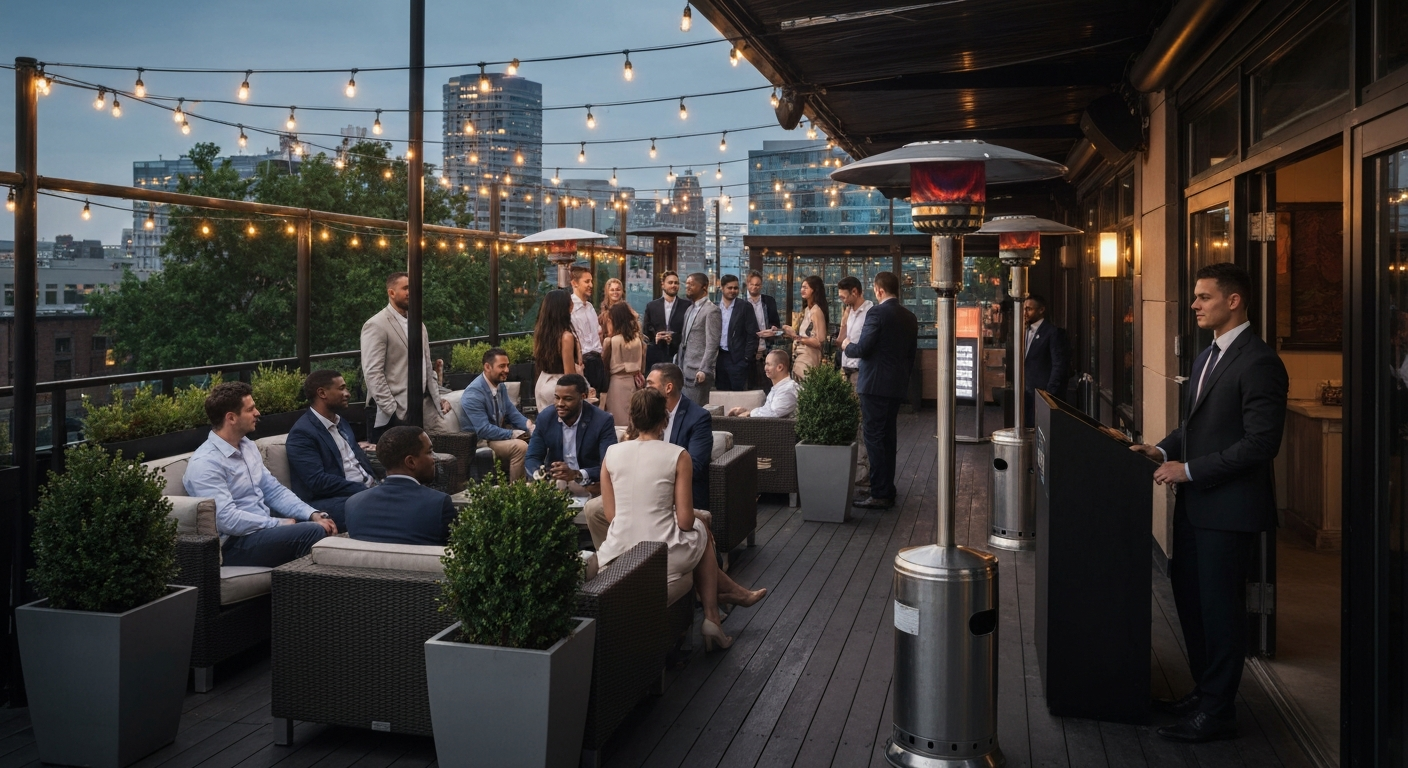
What "Patio Nightclub Dress Code" Actually Means
The term combines two things that do not always feel like they belong together: an open-air, relaxed outdoor setting and the kind of door-policy enforcement you expect inside a nightclub. The result is a hybrid rule set. The venue wants the outdoor vibe but still expects guests to look the part. This matters because "patio" does not automatically mean "anything goes." Carbone Miami, for example, keeps its outdoor patio available weather permitting but enforces the same dress policy across every seat in the house: no shorts, no open-toed shoes, no tank tops, and any guest who does not appear sufficiently well-presented may be refused entry. That is a nightclub-tier policy applied to an outdoor patio table.
The practical takeaway is simple: always look up the specific venue's policy before you head out, and treat a "patio nightclub" as a nightclub first and a patio second when it comes to what you wear.
Why Dress Codes Matter for Outdoor Nightclub Patios
Dress codes at outdoor nightclub patios serve a few distinct purposes beyond aesthetics, and understanding them helps you take the policy seriously rather than rolling up hoping to slip through.
Setting the vibe and managing expectations
Upscale venues invest heavily in atmosphere: lighting, landscaping, furniture, and music programming. Letting in guests in beachwear or athletic jerseys undercuts that experience for everyone else at the table. A dress code is essentially the venue's way of curating the social energy of the room, or in this case, the terrace.
Safety, liability, and legal compliance
Outdoor patio surfaces, especially after rain or with ambient irrigation, can be slippery. NIOSH research on footwear traction confirms that slip resistance varies significantly by shoe design and decreases as soles wear down, which is part of why many venues ban flip-flops and smooth-soled sandals: it is a genuine safety call, not just snobbery. Additionally, U.S. law (Title III of the ADA and federal public-accommodation rules) prohibits venues from applying dress-code policies in a discriminatory way based on race, religion, national origin, or disability. The DOJ has brought enforcement actions against venues where door policies functioned as pretexts for exclusion, so legitimate dress codes are written in objective, attire-specific language and enforced uniformly.
Operations and event flow
For event planners, dress codes also function as an operational filter. VIP sections, bottle-service tables, and private bookings often carry stricter requirements than general admission. If you are coordinating a group for a patio nightclub event, having a clear dress code in your pre-event communication prevents the awkward scenario of one guest getting turned away at the door while the rest of the party is already inside.
The Four Dress-Code Categories Explained
These four tiers cover the vast majority of patio nightclub policies across North America. The labels are not perfectly standardized, but the general definitions are widely understood in the industry.
- Casual: The most relaxed tier. Clean, neat everyday clothing is acceptable. Think presentable jeans, a clean T-shirt, and sneakers. Most casual patios still exclude athletic wear, torn clothing, or beach gear.
- Smart Casual: The most commonly used label at mid-range and upscale restaurant patios. GQ and similar style guides define it as a blend of neat, presentable items (blazers, dark jeans, chinos, clean leather or dress shoes) that read dressier than activewear but less formal than a suit. It is the sweet spot most patio nightclubs are aiming for.
- Dressy / Clubwear: Standard nightclub attire. Dresses, heels, button-down shirts, dress pants, blazers. Prohibited items typically mirror those at LIV Miami and similar venues: no tank tops, no shorts, no sandals or flip-flops, no jerseys or athletic wear.
- Upscale / Black Tie Optional: The strictest tier. Found at high-end supper clubs and rooftop venues. Cocktail dresses, suits, sport coats expected. Sneakers and open-toed casual shoes are usually excluded even if they are expensive.
Concrete Do's and Don'ts for Each Category
Casual patio
- Do: Clean jeans or shorts, neat T-shirt or polo, clean sneakers or loafers, sundress or casual skirt
- Don't: Torn or stained clothing, swimwear, beachwear cover-ups, flip-flops on wet surfaces, workout leggings as a standalone outfit
Smart casual patio
- Do: Dark or well-fitted jeans, chinos, blouses, button-down shirts, blazers, clean leather sneakers or loafers, midi dresses, heeled sandals with ankle support
- Don't: Athletic shorts, running shoes, hoodies, graphic T-shirts with offensive imagery, baggy cargo pants, flip-flops
Dressy / clubwear patio
- Do: Cocktail dress or fitted dress, heels with adequate traction, dress pants and blazer or sport coat, dressy jumpsuits, leather or suede dress shoes
- Don't: Tank tops, shorts of any length, sandals or flip-flops, jerseys or athletic wear, baseball caps, heavily distressed jeans
Upscale patio
- Do: Cocktail attire, formal dresses, suits or sport coats with dress trousers, closed-toe heels or dress shoes with slip-resistant soles for outdoor surfaces
- Don't: Any open-toed flat sandals, sneakers of any kind, shorts, casual denim, visible athleisure, casual backpacks instead of clutches or small bags
Quick-Reference: Dress-Code Categories at a Glance
| Category | What to Wear | What to Avoid | Typical Venue Type |
|---|---|---|---|
| Casual | Clean jeans, neat tees, shorts, clean sneakers, sundresses | Torn clothing, swimwear, dirty footwear, heavily athletic looks | Casual patio bars, neighborhood beer gardens, family-friendly outdoor grills |
| Smart Casual | Dark jeans, chinos, blouses, loafers, blazers, midi dresses, heeled sandals | Athletic shorts, running shoes, hoodies, flip-flops, offensive graphic tees | Mid-range restaurant patios, rooftop bars, wine bars, patio lounges |
| Dressy / Clubwear | Cocktail dresses, dress pants, blazers, heels, dress shoes, fitted jumpsuits | Tank tops, shorts, sandals/flip-flops, jerseys, athletic wear, baseball caps | Nightclub patios, upscale rooftop clubs, high-energy lounge terraces |
| Upscale / Black Tie Optional | Formal dresses, suits, sport coats, closed-toe dress shoes, elegant accessories | Sneakers, open-toed flat sandals, casual denim, athleisure, casual bags | Fine dining terraces, members-only clubs, special event rooftops, luxury hotel bars |
Patio vs Indoor Rules: Key Differences and Why They Matter
The most common assumption people make is that moving from an indoor table to a patio seat automatically relaxes the dress code. At some venues that is true, but at others the same rules apply throughout. The differences, when they exist, are driven by a few real-world factors.
Seasonal and climate-driven variation
A rooftop patio in Miami in August operates very differently from the same venue in January. Some Miami venues explicitly note that patio seating is available weather permitting, which means seasonal availability affects whether the outdoor dress policy even comes into play. In colder northern cities, heated patio setups in fall and winter often add a practical layer requirement (more on that below), and some venues quietly relax footwear rules slightly to accommodate boots. In sunbelt cities like Miami or Phoenix, the opposite can happen: heat drives guests toward lighter fabrics, but upscale venues still prohibit beachwear regardless of temperature.
Regional norms
Patio culture varies considerably across North America. In laid-back California beach cities, even mid-tier restaurant patios may run casual to smart casual. In Miami's nightlife corridor, outdoor terraces at clubs and high-end restaurants enforce clubwear or upscale policies just as strictly outdoors as in. Canadian venues follow the same general tiers, but entry age requirements differ by province: Ontario enforces 19 as the minimum drinking age (per the AGCO), while Alberta, Quebec, and Manitoba allow entry at 18. In the United States, the National Minimum Drinking Age Act (23 U.S.C. §158) led states to set 21 as the legal purchase/public‑possession drinking age, and many nightclubs therefore adopt 21+ entry policies, though some venues use an "18 to enter, 21 to drink" model or follow specific state/local license rules that create exceptions. If you are event planning across the border, that detail matters more than the shirt you pick.
The practical rule of thumb
When in doubt, dress for the stricter indoor standard. It is far better to be slightly overdressed on a patio than to be turned away at the host stand. If you genuinely want patio-specific flexibility, call ahead or check the venue's website directly rather than assuming outdoor means casual.
Real Venue Examples: What to Expect and Check
Looking at specific venues covered across this guide gives you a concrete sense of how wide the range actually is. None of these should be taken as permanent policy without a current verification, because venues update their rules seasonally and for special events.
Carbone Miami: patio and indoor apply the same strict standard
Carbone Miami is one of the clearest examples of a venue that makes no distinction between patio and indoor dress expectations. The official policy states no shorts, no open-toed shoes, and no tank tops, and warns that guests who do not appear sufficiently well-presented may be refused entry. Whether you are booking a patio seat (weather permitting) or an indoor banquette, you are dressing for the same upscale-dressy standard. If you are comparing the patio versus indoor experience at Carbone Miami, or thinking through whether a Carbone AMEX patio booking works differently from a standard reservation, the dress code itself does not change based on where you sit. The full breakdown of that patio-versus-indoor question is covered in the dedicated Carbone guides on this site. For a full comparison of patio and indoor policies at Carbone Miami, see our Carbone Miami patio vs indoor guide.
Patio 44 Biloxi: business casual, a more accessible standard
Patio 44 in Biloxi lists its dress code on OpenTable as Business Casual, which puts it squarely in smart casual territory: think chinos, neat shirts, and clean shoes rather than clubwear or a suit. It is a noticeably more relaxed standard than Carbone, and more typical of upscale-casual Gulf Coast dining. The Patio 44 Biloxi guide on this site covers the full venue details including current hours and reservation tips.
The Patio Palo Alto: relaxed and event-flexible
The Patio at Rudy's in Palo Alto does not publish a formal restrictive dress code on its public pages. The venue emphasizes casual, first-come outdoor seating and a flexible events setup. That is a California-casual approach that reflects the regional norm: the expectation is neat and presentable, but there is no door policy comparable to a Miami nightclub. If you are planning an event there, it is worth calling ahead to confirm whether a private booking adds any attire expectations. The Patio Palo Alto venue page on this site has the details.
Park Street Patio: check before you go
Park Street Patio is another venue in this guide's coverage area where the dress code is worth verifying directly before your visit, especially if you are going on a weekend night or for a ticketed event. The Park Street Patio dress code guide on this site walks through what the current policy looks like and what past visitors have reported.
Footwear, Layering, and Weather Guidance for Outdoor Patios
This is the section most dress-code guides skip, and it is genuinely the most practical part of navigating a patio nightclub. Getting the attire tier right is step one. Making sure you are actually comfortable and safe on an outdoor surface at night is step two.
Footwear: traction matters more outside than inside
NIOSH research is clear that outdoor patio surfaces, especially stone, tile, or composite decking that can get wet from ambient humidity, irrigation, or rain, significantly increase slip risk compared to interior floors. Smooth leather soles and stiletto heels lose traction quickly on these surfaces, and traction performance decreases further as soles wear down over time. For dressy or upscale patios, look for block heels or kitten heels over stilettos if you will be on a terrace, and choose shoes with a rubber or textured sole over a fully smooth one. Men in dress shoes should avoid thin, smooth leather soles on wet stone. This is not about compromising style, it is about not ending your night early.
Layering for spring, fall, and winter patios
Heated patios are increasingly common from late September through March in northern markets, but even with patio heaters, temperatures drop significantly after midnight. A well-chosen layer that works with your outfit is a practical necessity, not a style afterthought. For smart casual or dressy tiers, a tailored blazer for men or a fitted wrap or structured jacket for women threads the needle between warmth and staying in dress code. Bulky hoodies or oversized parkas can actually get you a second look at the door even if they are just outerwear, because door staff sometimes ask you to remove them to check the outfit underneath. Bring a layer that you would be comfortable wearing at the table, not just walking to the venue.
Blankets and timing
Some upscale patios provide lap blankets for guests at seasonal outdoor tables. It is a nice touch, but do not count on it. If you are booking a patio seat in October in a northern city or at altitude, ask when you make the reservation whether blankets or heat lamps are available. If the answer is no, factor that into your layering plan. Timing also matters: outdoor nightclub patios are typically most crowded (and warmest from body heat) between 10 p.m. and 1 a.m. on weekend nights. Arriving for an early dinner seating at 6 p.m. in fall means you will be out there during the coldest window of the evening as temperatures drop, so plan accordingly.
Special Events, VIP Areas, and Private Bookings
Standard dress-code tiers often get upgraded for ticketed events, holiday nights, and New Year's Eve parties. A venue that runs smart casual Thursday through Sunday may enforce a strict dressy or upscale standard on a ticketed event night, and that policy will typically appear on the event listing rather than the main venue page. LIV Miami's event listings, for example, itemize a specific prohibition list per event that goes beyond their general policy. The rule here is: always check the event-specific listing, not just the venue's evergreen policy page.
For VIP sections and bottle-service tables, the floor policy is usually the floor: you still need to meet the general dress code to get in before being escorted to your table. Private bookings and buyouts are where you have the most flexibility. Many venues will negotiate a dress-code note in the event contract, which is particularly useful for corporate events or milestone celebrations where the host wants to define the attire expectation for their guests. Get any deviation from the standard policy in writing before you send invitations.
Enforcement: What to Expect and What to Do If Turned Away
Door staff at patio nightclubs generally enforce dress codes at the entry point, before you reach the host stand. If you are turned away, you will typically be told which specific item is the issue, which gives you a chance to address it. Some guests keep a backup outfit component in the car (a blazer, a pair of dress shoes) precisely for this reason, and it is not a bad habit if you are visiting a new venue for the first time.
If you believe a dress-code refusal was applied inconsistently or on a discriminatory basis rather than based on your actual attire, you have recourse. The DOJ has taken enforcement action in cases where venue door policies were used as a pretext for exclusion based on race, national origin, or other protected characteristics, including settlements requiring venues to adopt non-discriminatory dress-code policies and complaint procedures. Document what happened (time, what you were wearing, what you were told), and contact the venue management or, in serious cases, your state or local human rights agency.
How to Find and Verify the Actual Dress Code Before You Go
Venue-specific policies are the only reliable source. General category labels like "smart casual" mean different things at different venues, and they change for events. Here is the practical checklist for getting it right.
- Check the venue's official website first, specifically the "Hours & Information," "Reservations," or "FAQ" page where dress-code language is most commonly posted.
- Check your reservation platform (Resy, OpenTable, Tock). Many venues repeat or summarize their dress-code policy in the reservation confirmation or on the venue listing page, as Patio 44 does on OpenTable.
- Search for the venue's event listings if you are going on a ticketed night. Event-specific policies often differ from the evergreen venue policy.
- Call the venue directly if the policy is unclear or if you have a specific question about an item (for example: are tailored shorts acceptable at a smart casual patio in summer?). Most venues will give you a direct answer.
- Check the venue's page on Patio Restaurant Guide, which compiles dress-code information, current hours, and patio-specific details for venues across North America.
- For Canadian venues, also confirm the minimum age for entry in the relevant province, as it varies (19 in Ontario, 18 in Alberta, Quebec, and Manitoba).
Your Pre-Visit Dress-Code Checklist
Run through this before any patio nightclub visit and you will avoid the most common mistakes.
- Look up the venue's current dress code on their official site or your reservation platform, not just a third-party review.
- Check whether tonight is a ticketed event or holiday night that upgrades the standard policy.
- Confirm your footwear has adequate traction for an outdoor surface, especially if rain is in the forecast.
- Plan a layer that is dress-code compliant and warm enough for the forecasted late-night temperature.
- If booking for a group, communicate the dress code in your pre-event message so no one gets turned away at the door.
- For private or VIP bookings, get any dress-code accommodation in writing before the event.
- Know the minimum age policy for the venue and local jurisdiction, especially for groups that include guests in their late teens or early twenties.
- Bring a backup blazer or dress shoes in the car for the first visit to a new venue.
FAQ
What is a “patio nightclub dress code”?
Definition: A patio nightclub dress code is a venue‑level policy that specifies acceptable attire for guests using an outdoor nightclub patio. It adapts standard nightclub/restaurant dress rules to outdoor conditions and event types. Key features: - Itemized prohibitions (e.g., “no shorts,” “no flip‑flops,” “no tank tops”) and behavioral expectations. - Labels such as Casual, Smart Casual, Dressy/Clubwear, or Upscale to communicate formality. - A venue’s right to refuse entry for non‑compliance, often with weather‑ or event‑specific caveats.
Why do patio dress codes matter for casual diners, patio enthusiasts, and event planners?
Purpose and practical impact: - Ambience: Dress codes protect a venue’s intended atmosphere and brand for diners and patrons. - Safety & comfort: Outdoor surfaces, heaters, and furniture influence acceptable footwear and layering. - Operations: Door/host staff rely on clear standards to manage capacity, VIPs, and private bookings. - Legal & compliance: Venues must apply codes non‑discriminatorily (see ADA and DOJ precedent) to avoid enforcement or litigation.
What common dress‑code categories do venues use and what are concrete do’s and don’ts?
Common categories and practical guidance: 1) Casual Do: neat T‑shirts, polos, clean sneakers, jeans. Don’t: swimwear, dirty athletic gear, flip‑flops if terrain is uneven. 2) Smart casual (middle ground) Do: button shirts, blazers optional, dark jeans or chinos, loafers or clean low heels. Don’t: gym shorts, tank tops, worn‑out trainers. 3) Dressy / Clubwear Do: fashion‑forward outfits, fitted dresses, collared shirts, dress shoes. Don’t: athletic jerseys, sandals, baseball caps indoors or for VIP areas. 4) Upscale / Business‑casual Do: sport coat or dress, polished shoes, tailored pieces. Don’t: shorts, open‑toe flip‑flops, overtly casual beachwear. Concrete item list often banned: flip‑flops/sandals, athletic shorts, tank tops, beachwear, overly baggy athletic clothes—examples reflected in venue policies like Carbone Miami and many nightclub listings.
How do patio rules differ from indoor dress codes, including seasonal and regional variations?
Differences and variations: - Practical differences: patios require more footwear/traction and layering guidance; indoor areas may forbid outerwear or hats that are fine outside. - Seasonal notes: colder regions expect coats, hats, and boots in fall/winter; hot climates emphasize sun‑appropriate smart clothing (no wet swimwear) and heat‑safe fabrics. - Regional norms: city nightlife hubs (Miami, NYC) trend toward dressy/clubwear; smaller towns or casual beach communities allow more relaxed patio attire. - Weather permitting: venues frequently flag patio status (open/closed or heated) and may adjust rules when patios are closed or during storms.
What footwear, layering and weather guidance should patrons follow for outdoor patios?
Footwear & weather practical guidance: - Traction: choose shoes with good tread; avoid smooth leather soles and very high stilettos on wet/uneven surfaces (CDC/NIOSH research supports slip‑resistance concerns). - Stability: moderate heels or wedges are safer for outdoor tiles/stones than thin stilettos. - Layering: bring a lightweight jacket or wrap for evening chills; venues may provide heaters but plan for drops in temperature. - Rain: have weather‑appropriate outerwear; some venues reserve the right to close patios or deny entry to patrons in wet swimwear or unsafe footwear.
How do dress codes change for special events, VIP areas, and private bookings?
Event‑specific adjustments: - Special events (guest DJs, bottle service nights) often raise formality—venues may require dressy/clubwear for entry. - VIP areas typically enforce stricter dress standards and may require reservations or minimum spends. - Private bookings can set bespoke dress rules in contracts (planners should confirm expectations in writing and with signage/guest communications). - Always verify event listings and booking confirmations: nightlife event pages and restaurant hours/info pages often list party‑specific dress requirements (examples: nightclub event listings such as LIV or venue pages like Carbone).